Causes of Hair Loss in Men: How to Tell the Types Apart
Hair loss is a symptom, not a single condition. Here is how the common causes present differently — post-illness shedding, tension damage from styling, patchy loss, scarring patterns and scalp disease — and what to note before you see a dermatologist.
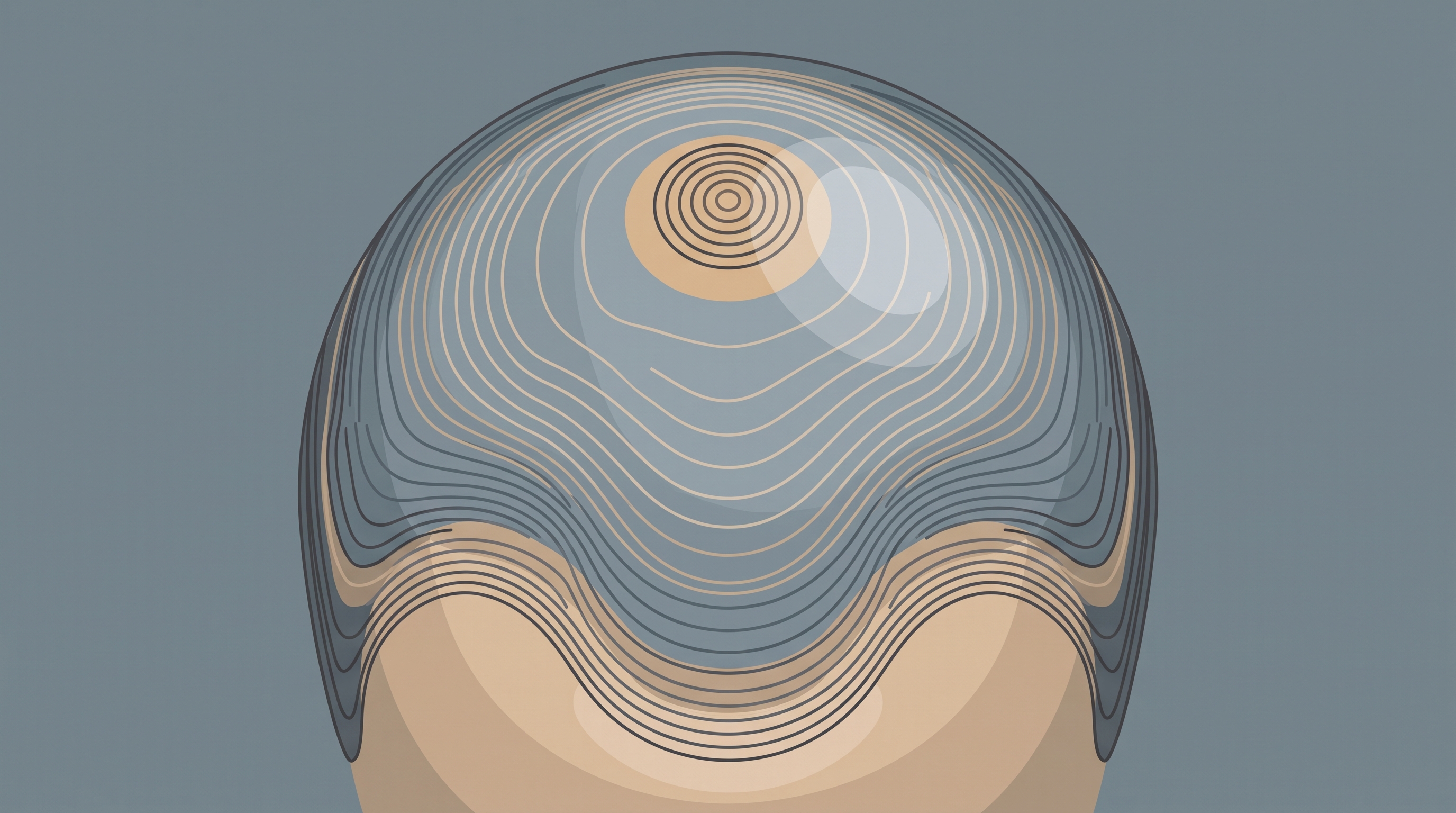
Most men notice it in an unglamorous way: more hair in the shower drain, a scalp that catches the light differently under the bathroom mirror, a barber mentioning something about the crown. The instinct is to go shopping — a shampoo, a serum, a supplement someone recommended online. That instinct skips a step. Hair loss is a symptom with several distinct causes, and the shape, speed and setting of the loss are what separate one cause from another. Finding out what is behind it is the key to treating it successfully, and treatment generally works best when it starts early. That makes orientation worth a few minutes before your credit card comes out.
Why the cause matters more than the product
Dermatologists frame this plainly: the key to treating hair loss successfully is finding out what is causing it, and the key to successful treatment is getting the right diagnosis. Two men with the same amount of visible thinning may have completely different things going on — one temporary, one progressive, one caused by a daily habit rather than anything happening inside the follicle. A product chosen for the wrong cause is not a neutral experiment either; it costs time, and time matters, because treatment tends to be most effective when it is started early.
None of what follows is a way to diagnose yourself. Think of it as vocabulary — a way to describe what you are seeing accurately enough that a clinician can work with it, and a way to recognise which situations deserve an appointment rather than a wait-and-see month.
Shedding that follows illness or stress on the body
One of the more disorienting presentations is diffuse shedding after a period of illness. Noticeable hair loss can develop after recovering from COVID-19, for example — hair comes out in handfuls, often weeks after you feel well again, and the loss reads as general thinning across the head rather than a defined bald spot. The mismatch in timing is what confuses people: the body has moved on, and the hair has not. Because the pattern here is spread out rather than localised, the timeline you can give a clinician — when you were ill, when the shedding began — is often more diagnostically useful than the appearance of your scalp.
Hair loss you can trace to styling and tension
Some hair loss is mechanical. If you often pull your hair tightly into a bun, cornrows or another tight style, you can develop a type of hair loss called traction alopecia. It typically shows up where the pull is strongest rather than in a symmetrical pattern, which is one reason the styling history matters so much in an assessment. Weaves and extensions belong in the same conversation: they can damage natural hair and even cause hair loss if proper precautions and care are not taken.
The encouraging part of this category is that the input is under your control. Making some simple changes to your hair care can stop the damage — looser styling, giving the scalp breaks, and easing off whatever is applying constant tension. Stopping further damage is not the same as guaranteed regrowth, and a dermatologist is the right person to say what is still recoverable in your case.
Patterns dermatologists treat as distinct conditions
Several conditions have recognisable signatures. One type of hair loss tends to develop quickly, often causing a few bald patches; some people lose all the hair on the head or body. Alopecia areata falls in this territory, and dermatologists have specific expertise in treating it. Speed and sharply defined edges are the details worth noting here — this is not the slow, ambiguous thinning most men picture when they think of male pattern hair loss.
Central centrifugal cicatricial alopecia, usually shortened to CCCA, often begins as a round spot on the top of the head and spreads outward from there. Starting treatment when you first notice this hair loss may help you regrow some hair, which is the clearest practical argument against waiting to see what happens. Frontal fibrosing alopecia has a different tell: it often causes a receding hairline together with noticeable loss of the eyebrows. Eyebrow involvement is easy to overlook and worth mentioning at an appointment, since it is not a feature of every hairline change.
When the scalp itself is the problem
Sometimes the story is a skin condition rather than a hair condition. When psoriasis develops on the scalp, hair loss sometimes follows — the visible complaint is scaling, irritation and plaques, with thinning as a downstream consequence. Hair tends to regrow in this situation, which makes managing the underlying skin disease the sensible focus rather than chasing the hair itself. If your scalp is itchy, flaking, sore or visibly inflamed alongside the shedding, say so; that detail points an examination in a different direction entirely.
Preparing for a professional scalp evaluation
You can make an appointment considerably more productive by arriving with observations rather than conclusions. Useful notes include when you first noticed the change, whether it appeared gradually or over a few weeks, where on the scalp it is concentrated, whether the skin looks or feels abnormal, any illness or major physical stress in the preceding months, and your honest styling history — tension, extensions, heat, chemical processing. Photographs taken in consistent lighting over time are more reliable than memory.
What a specialist adds is not just a name for the pattern. Dermatologists have the expertise and tools to help get to the root cause of hair loss, and since the right diagnosis is what makes treatment succeed, that assessment is the step everything else depends on. It is also why early action is worth more than early shopping: treatment tends to be most effective when started early, and no honest account of any hair loss treatment can promise a particular result.
American Academy of Dermatology hair education