Thinning Hair Care for Men: Gentler Washing, Drying and Styling Habits
Thinner hair doesn't need harsher grooming. Here's how to wash, dry and style more gently so fragile hair breaks less, and why that isn't the same thing as treating hair loss.
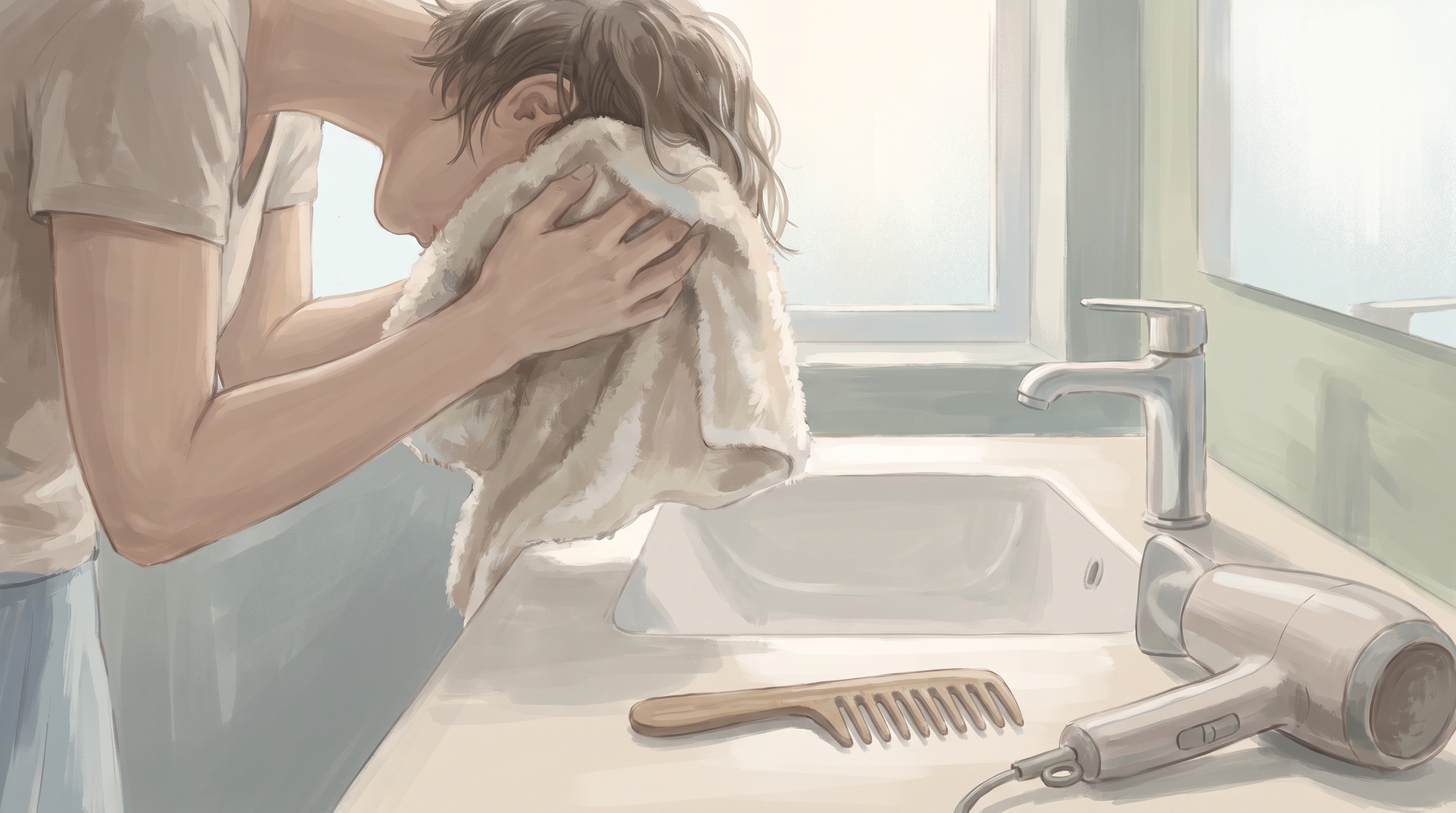
You notice more scalp under the bathroom light, so you scrub harder, blast the dryer longer and add more product to fake volume. It's a common reaction, and it usually goes the wrong way. Dermatologists point out that how you shampoo, condition and use heat can make a big difference to the health of your hair. When hair already looks sparse, every strand you lose to rough handling shows more. This guide covers thinning hair care for men as a daily grooming job: small changes that reduce avoidable damage. It doesn't promise to reverse hair loss.
Why Your Daily Routine Matters When Hair Feels Thinner
Dermatologist guidance on hair care keeps coming back to the same everyday areas: shampooing, conditioning and heat. These aren't treatments. They're the habits that decide whether the hair you have stays intact or snaps, frays and falls out early. Breakage from rough handling is separate from the causes of thinning, but it can make thin hair look thinner still.
Be clear about what a gentler routine can do. It protects existing hair and can make it look fuller and healthier. It won't regrow hair or stop pattern hair loss. If you notice ongoing shedding, patchy spots or a sudden change, see a dermatologist, because only a proper assessment can sort out what's going on.
Washing and Conditioning Without Extra Stress
Shampoo and conditioner are two of the core areas dermatologists address in hair care guidance, which makes sense: you probably handle your hair more in the shower than at any other point in the day.
Our suggestion is to keep things mechanical and calm. Work shampoo into the scalp with your fingertips, not your nails, and don't pile the hair up and scrub it like a pan. Rinse thoroughly so no residue is left to weigh strands down. Put conditioner mostly on the lengths, and resist the urge to comb or tug while the hair is soaked. Wet hair tends to be at its most vulnerable, so a lighter touch here pays off.
Drying and Heat: Keep It Moderate
Heat is another area dermatologists single out when they talk about protecting hair health. You don't need an exact number to act on that. Just use less heat, less often.
In practice, blot your hair with a towel instead of rubbing it hard, and let it air-dry partway before you reach for a dryer. If you do use one, pick a lower setting, keep it moving and don't park it over one spot to force lift at the crown. Flat irons and hot brushes are rarely needed on short men's cuts. If you use them, save them for occasions rather than every day.
Styling Choices That Can Work Against You
According to dermatologists, styling can make hair brittle and frizzy, and it may even cause it to fall out. That matters if you're compensating for thinning with tight styles, constant combing or stiff products that you work in and strip out every day.
A few adjustments help. If you wear longer hair tied back, keep ponytails and buns loose and change where you secure them. Use a wide-tooth comb in place of a fine brush on damp hair. Choose lighter products you can apply with minimal working. Often a cut shaped for your current density does more for the overall look than any amount of daily force.
Think Twice About Coloring and Perming
Some men darken their hair to shrink the contrast with the scalp, or get a perm for body. Dermatologists warn that coloring and perming can damage hair, and that's a real trade-off when strands are already fine. If you still want to go ahead, talk it through with an experienced stylist, ask about gentler options, space treatments out and don't combine chemical services with heavy heat styling in the same week.
Hair Texture Changes the Approach
No single routine suits every head of hair. Dermatologists note that Black people's hair is unique in appearance and structure and especially fragile, which is why they give specific tips for keeping damage down. Men with tightly coiled or curly hair should look for texture-specific dermatologist guidance and not borrow habits designed for straight hair.
Whatever your texture, the pattern is the same. Wash with care, dry with less heat, style with less tension and treat chemical processes as occasional choices. None of this replaces medical care for hair loss, but it gives the hair you have the best chance of looking its best.
American Academy of Dermatology hair education