Wrinkle Treatment in Korea: How Men Can Describe Their Lines at Rest and in Motion
Before you compare devices or injections, work out which lines bother you and when they appear. Here is a simple mirror check, how one Seoul clinic says it sorts lines, and the questions to take into a Korean consultation.
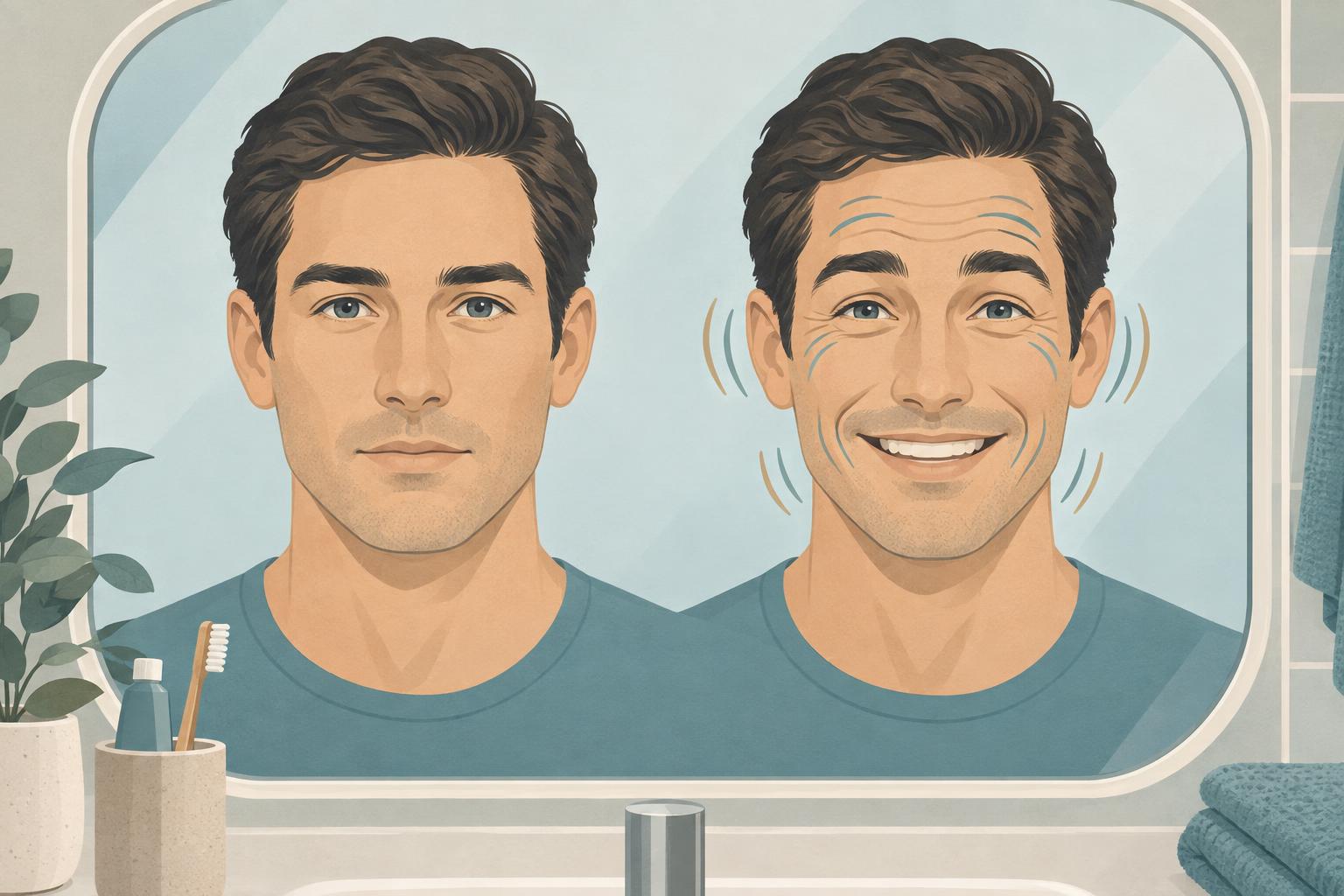
Most men notice a wrinkle long before they can explain it. Maybe it's a crease across the forehead in a work photo, a line between the brows that seems to stay after a long week, or a fan of marks at the corners of the eyes when you laugh. If you are thinking about wrinkle treatment in Korea, the best preparation isn't picking a device or an injection from a list. It's being able to say clearly which lines bother you and when they show up. This guide covers a simple way to look at your own face, how one Seoul clinic says it sorts lines, and the questions to take into a consultation, especially one held in a language that isn't your own.
Why the type of line matters before any treatment is named
One Seoul clinic points out on its own treatment page that searching for wrinkle options in Korea tends to bring up lists of machines and injectables, with little about which line each one is meant for. It goes on to describe three different problems: movement lines, folded lines that stay on a still face, and crepey skin that has simply thinned.
That is the clinic's own way of organising a consultation. It is not a medical classification for labelling your own face. Its use to you is simpler: it shows that one word, "wrinkles", can cover quite different concerns, and that a clinician will want to know which one you mean. The same clinic also says that results and recovery vary between individuals and that every treatment can have side effects. Keep that in mind when you read any provider's descriptions.
A simple mirror check: your face at rest and in motion
All you need is good light, a plain mirror and a couple of minutes. Start with a neutral face: relax your jaw, keep your brows still, and look at three areas: the forehead, the space between the brows, and the skin around the eyes. Note any line you can see without making an expression. Then frown, smile broadly and raise your brows, one at a time. Watch which lines appear only with the movement and which were there before you started.
Describing forehead and smile lines this way gives you plain, factual wording, such as "two horizontal lines across the forehead that appear only when I raise my brows" or "a crease beside the mouth that I can still see when my face is relaxed". Taking a phone photo of each state helps you remember. The point is to describe what you see, not to decide what it is or what should be done about it.
Bringing both descriptions matters because of how at least one clinic says it assesses faces. The Seoul clinic mentioned above says it looks at lines at rest and in movement before agreeing which ones are worth treating first. It also asks people getting in touch from abroad to send a photo and their travel dates. Its guide to wrinkle treatment korea shows how it matches each line type to the options it offers, which is why it helps to have both a still-face description and an expression description ready. That matching is the clinic's approach, not a verdict on your lines. Your observations alone cannot establish a diagnosis, so ask the clinician to assess the lines before deciding on a plan.
Getting your description across in a Korean consultation
A clear description only helps if it survives the conversation. Many international men will sit with a clinician whose first language is Korean, and a detail like "only when I frown" is easy to lose. KCODI, which arranges bookings at Korean clinics and medical interpretation, says it assigns a medical interpreter who joins your consultation. It says this is free to the patient because the clinic pays KCODI's coordination fee.
If you are arranging wrinkle treatment korea through a coordinator instead of booking directly, ask whether an interpreter can join your consultation and when you will get a written quote. KCODI says patients see an itemised written quote before paying any deposit. It also says that what clinics offer differs, so ask what applies to the clinic you have in mind. Its dermatology section lists Botox, Rejuran and laser lifting, but a general list like that does not confirm that a particular wrinkle procedure is offered at a particular clinic. A coordinator is not a clinic or an independent ranker. Medical decisions stay with the clinician you see.
It helps to write your mirror notes as short, simple sentences before the appointment. One observation per line, such as which area, which expression, and whether the line is still there at rest, is much easier to interpret accurately than a long, loose description given on the spot.
Questions to bring, and what a clinic's description cannot settle
Once you can describe your lines, turn those notes into a short list of consultation questions. Start with: which of the lines I described would you treat first, and why? Then ask whether the plan means one visit or several. The clinic page above describes Rejuran as a course of three to four sessions and advises comparing plans, not headline figures. Finally, ask what could change the figure in your quote. The same page lists factors such as the number of Thermage shots, the amount of product and the number of visits.
Be ready to share information as well. The clinic asks patients to mention recent fillers, isotretinoin or any medication that affects healing, and to say if their flight date is already fixed. That last point matters if you are fitting a consultation into a short trip.
If you see prices on a clinic's website, read the conditions. This clinic says its listed prices come from its own price list dated 20 August 2026, and that the final figure is confirmed at consultation once the doctor has seen your skin. Those numbers describe one clinic at one point in time, not a general market rate.
None of these descriptions settle what is right for your face. They are what providers say about themselves, and the clinic itself notes that outcomes vary and side effects are possible. Your mirror notes and questions will make the conversation clearer, but the decision belongs to you and a clinician who examines you in person.